Category: Blog

Your blog category

  • Why Your Pitch Deck Is a Brand Document: How Indian Startups Build Investor Confidence Through Branding

    Why Your Pitch Deck Is a Brand Document: How Indian Startups Build Investor Confidence Through Branding

    Every Indian startup founder who has sat across a table from a serious investor knows the feeling: the product is compelling, the market opportunity is real, the team is strong and something is still not landing. The meeting ends politely and the follow up never comes.

    Often, the missing variable is not the business. It is the brand.

    Investors — whether angel investors in Ahmedabad, Series A funds in Bengaluru, or growth equity in Singapore are evaluating dozens of companies simultaneously. The cognitive shortcut they use, whether consciously or not, is brand quality as a proxy for management quality.

    A startup whose pitch deck, website, product interface, and brand materials communicate precision and intentionality is telling the investor something before a single slide is presented: the people running this company pay attention to detail. They think about how they show up. They invest in quality. These are the same qualities that will build a category-defining company.

    The Four Moments Where Startup Brand Quality Determines Outcomes

    The Cold Introduction

    Most investor relationships begin with a cold introduction an email, a LinkedIn message, a WhatsApp forward from a mutual contact. The first thing the investor does is Google the company name.

    In the ten seconds they spend on the website, LinkedIn page, and any media coverage, they form a brand impression that will colour every subsequent interaction. A startup whose digital brand presence communicates world class from this first encounter has already differentiated itself from the majority of companies that reach the same inbox.

    The Pitch Deck

    A pitch deck is a brand document. Every design choice the typography, the colour system, the information hierarchy, the quality of the charts and data visualisation, the photography communicates something about the founders’ standard of thinking.

    The pitch decks that get follow-up meetings are not necessarily the ones with the best business metrics. They are the ones where the business metrics are communicated with the quality, clarity, and intentionality that makes the investor want to know more. The deck is the brand’s first detailed expression. It must be equal to the company’s ambition.

    The Due Diligence Phase

    When a serious investor moves into due diligence, they examine the entire brand ecosystem: the product interface, the customer-facing communication, the team’s LinkedIn presence, the sales collateral, the marketing materials.

    Inconsistency at this stage is a red flag. A startup whose pitch deck is world-class but whose product interface looks unfinished, or whose sales materials use a different visual language, signals that the brand quality in the pitch was a one time investment, not an expression of organisational standards.

    The Post-Investment Brand

    After investment closes, the brand continues its work attracting the next round, recruiting senior talent, winning enterprise customers who evaluate suppliers with the same rigour that investors do. The startup that builds a brand system from the beginning, rather than polishing for each fundraise individually, compounds brand equity across every phase of growth.

    What Investor Grade Startup Branding Requires

    • A logo and visual identity that is distinctive, scalable, and communicates the category the startup is competing in
    • A website that functions as an investor brief market size, differentiation, traction, and team credibility visible within 30 seconds
    • A pitch deck design system not just a deck, but a visual language that can be extended to one-pagers, teaser emails, and data room materials
    • A LinkedIn presence for founders and the company that is consistent, credible, and actively communicating thought leadership in the category
    • Product or service visual quality that matches the pitch’s promise the gap between brand and product is the most expensive gap in startup fundraising

    The Bengaluru and Ahmedabad Startup Moment

    India’s startup ecosystem is at an extraordinary inflection point. Bengaluru has established itself as one of Asia’s premier startup hubs. Ahmedabad is producing an increasing number of capital efficient, market-smart startups across FMCG, healthcare, edtech, and fintech.

    But the average standard of brand and design quality in Indian startup pitching remains significantly below the global benchmark particularly when competing for attention from Singapore or US-based investors who are simultaneously evaluating Southeast Asian and European deals.

    The Indian startup that invests in brand quality at the same standard it invests in product quality is not spending on aesthetics. It is investing in the signal quality that determines how seriously it is taken at every stage of its growth trajectory.

      Ready to build a brand that commands your market? 

      Visit richestbranding.com  |  info@richestbranding.com

  • Your Instagram Feed Is Your Storefront: How Indian Businesses Build Brands That Convert on Social Media

    Your Instagram Feed Is Your Storefront: How Indian Businesses Build Brands That Convert on Social Media

    Ten years ago, a business’s brand lived primarily in its physical presence the store, the office, the product on the shelf. Today, for the overwhelming majority of Indian consumers and B2B buyers, the brand is encountered digitally first. Instagram. LinkedIn. YouTube. Google search results.

    This shift has created one of the most significant opportunities and most common failure points in Indian business branding.

    The opportunity: a mid sized business in Ahmedabad or Pune can now build brand reach and brand equity that would have required a crore-level advertising budget a decade ago.

    The failure point: most Indian businesses are building a social media presence without building a social media brand. The result is activity without equity posts without positioning, reach without resonance, followers without conversion.

    The Difference Between a Social Media Presence and a Social Media Brand

    A social media presence is a business that posts on Instagram. A social media brand is a business whose Instagram presence is indistinguishable from its values, its visual identity, its communication voice, and the specific customer it is built to attract.

    The distinction is visible within 3 seconds of visiting a profile. A social media brand has a feed that communicates a coherent aesthetic and point of view. Every post is part of a visual system. The caption voice is consistent. The colour palette is recognisable. The content categories are predictable in a good way the audience knows what to expect and comes back for it.

    A social media presence has a feed that reflects the chaos of whoever posted last. Some posts are product photographs. Some are stock images. Some are reposted memes. The caption tone changes every week. The business has a presence it does not have a brand.

    The Seven Pillars of a Social Media Brand System

    1. Visual Identity Translated for Digital Formats

    Your logo, colours, and typography must be designed for every digital context: a 1:1 Instagram post, a 9:16 Instagram Story, a LinkedIn header, a YouTube thumbnail, a WhatsApp Business profile. Each format has different dimensions, different viewing contexts, and different attention spans.

    Most Indian businesses have a logo. Very few have a complete digital brand identity system — the templates, the colour rules, the typography hierarchy, and the photography style that makes every post immediately recognisable as theirs without reading the brand name.

    2. Content Pillars, Not Random Posts

    A social media brand is built on content pillars 3 to 5 recurring content categories that define what the brand talks about, who it talks to, and what value it delivers to its audience.

    A branding agency’s content pillars might be: brand transformation case studies, brand strategy education, behind-the-scenes process, industry insight, and client celebration. An FMCG food brand’s pillars might be: recipe content, ingredient sourcing story, consumer testimonials, lifestyle aspiration, and product education.

    Content pillars create predictability. Predictability creates the audience habit of returning. Returning audiences build genuine community which is the asset that converts.

    3. Caption Voice as Brand Personality

    How a brand writes its captions is as important as how it designs its visuals. The caption voice formal or conversational, aspirational or educational, humorous or authoritative — must be consistent and must be a deliberate expression of the brand’s character.

    Indian businesses in particular underinvest in caption quality. A premium visual paired with a generic caption (‘Order now! Link in bio.’) is a brand mismatch that the audience registers subconsciously. Premium visuals require premium writing.

    4. The Grid as a Visual Essay

    For Instagram specifically, the grid the overall arrangement of the last nine to twelve posts as seen on the profile is the storefront window. New visitors evaluate the grid in under two seconds before deciding whether to follow or leave.

    A well-designed grid has visual rhythm: consistent colour treatment, alternating post types, a coherent overall aesthetic. It communicates immediately whether this brand invests in its digital presence at the level the audience should invest their attention.

    5. Stories and Reels as Brand Depth

    If the main feed is the brand’s curated face, Stories are its authentic voice and Reels are its reach engine. Stories build the parasocial relationship — the sense that the audience knows the brand and the people behind it. Reels build discovery they reach audiences who have never encountered the brand before.

    A complete social media brand strategy uses all three formats in coordination: the feed for brand equity, Stories for relationship depth, and Reels for audience growth.

    The Platform Strategy Question

    Not every platform is right for every brand. The first decision in any social media brand strategy is platform selection not based on where it is easiest to post, but based on where the specific target audience spends time and is receptive to brand messages.

    • Instagram consumer brands, D2C, lifestyle, food, fashion, wellness, real estate visual content
    • LinkedIn B2B services, corporate branding, professional services, EdTech, SaaS, industrial and manufacturing
    • YouTube long-form brand storytelling, tutorial content, brand documentary, product deep-dives
    • WhatsApp Business relationship-based sales, family business customer service, hyperlocal retail

    The most common and most expensive social media mistake Indian businesses make is trying to maintain a presence on every platform simultaneously, without the content infrastructure to do any of them well. The result is mediocrity everywhere instead of excellence somewhere.

    A coherent social media brand strategy picks the platforms that match the audience, builds the content system that serves those platforms, and invests consistently enough to build genuine brand equity not just post frequency.

      Ready to build a brand that commands your market? 

      Visit richestbranding.com  |  info@richestbranding.com

  • Trust Is the Product: How Indian Pharma and Healthcare Brands Build Credibility That Wins Global Markets

    Trust Is the Product: How Indian Pharma and Healthcare Brands Build Credibility That Wins Global Markets

    India is the pharmacy of the world. This is not a marketing claim it is a documented fact. India supplies over 50 percent of global vaccine demand, 40 percent of generic medicines consumed in the USA, and 25 percent of all medicines the UK uses. Ahmedabad and Hyderabad are global pharmaceutical manufacturing capitals by any measure.

    And yet India’s pharma brands are almost entirely invisible at the consumer level in the markets they supply. The medicines are Indian. The brand is always someone else’s.

    This is changing. And the Indian pharma and healthcare businesses that understand brand strategy now will be disproportionately positioned as this change accelerates.

    Why Pharma Brand Building Is Different and Why the Principles Are the Same

    Pharmaceutical and healthcare branding operates under constraints that most other categories do not face: regulatory requirements in every market, strict claims guidelines, professional buyer relationships built over years, and a product category where trust is not just desirable but existential.

    These constraints are real. But the fundamental principles of brand building apply here as powerfully as anywhere else: a coherent identity, a distinctive visual system, a consistent communication tone, and a brand story that builds trust faster than any individual interaction can.

    The pharma company that looks like a world-class pharmaceutical organisation in its packaging, its literature, its website, its sales collateral earns trust at the first impression that its competitor must spend months building through relationship management alone.

    The Three Tiers of Pharma and Healthcare Brand Strategy

    Tier One: The Corporate Brand

    The pharmaceutical or healthcare company’s corporate brand is its primary credibility asset in B2B relationships with hospital procurement committees, pharmacy chains, international distribution partners, and regulatory authorities.

    A corporate brand that communicates precision, rigour, scientific credibility, and operational excellence does a very specific job: it opens doors that a weaker brand cannot. The hospital procurement committee making a formulary decision between two equivalent generics will default to the brand that looks more credible, all else being equal.

    For Indian pharma companies seeking to build or expand presence in the US, German, or African markets, the corporate brand is evaluated before any product documentation. It is the first filter.

    Tier Two: The Product Brand System

    Indian pharma companies with broad product portfolios face a specific brand architecture challenge: how do you build a coherent product brand system that communicates the parent company’s credibility while differentiating individual therapeutic categories?

    The answer is a brand architecture system a set of rules that governs how the corporate brand identity is applied across product lines, packaging formats, and dosage forms. Consistent colour coding for therapeutic categories. Consistent typography hierarchy that prioritises safety critical information. Consistent material standards across the packaging system.

    This is not aesthetic preference. In pharma, packaging consistency prevents dispensing errors, builds pharmacist familiarity, and communicates the professional standard that the product’s clinical performance deserves.

    Tier Three: Direct to Consumer Healthcare Brands

    India’s OTC healthcare, nutraceutical, and wellness supplement category is growing at extraordinary pace. And in this category, the rules shift entirely: the consumer, not the prescriber, is the decision-maker.

    In the OTC and nutraceutical space, brand is the primary purchase driver. The health conscious consumer in Bengaluru or Pune evaluating protein supplements, vitamin stacks, or Ayurvedic health products makes decisions based on brand trust, visual identity, and the community the brand is associated with.

    Indian nutraceutical and OTC brands have the manufacturing quality and the ingredient provenance to compete at the highest level globally. The brand system is the missing layer.

    Regulatory Compliance as a Brand Asset

    Indian pharma companies often treat regulatory compliance WHO GMP certification, US FDA approval, EU GMP certification, UK MHRA approval — as an operational milestone. The smartest ones treat it as a brand asset.

    • Certification marks displayed prominently on corporate brand materials communicate manufacturing standard immediately
    • Regulatory approval history communicated as brand narrative ‘WHO-GMP certified since 2008’ is a brand story, not just a footnote
    • Quality certifications featured on export packaging communicate credibility to pharmacist and consumer simultaneously
    • Clinical trial data presented with brand-quality design communicates scientific rigour more effectively than a text document

    The Africa Opportunity for Indian Pharma Brands

    Africa represents one of the highest-growth pharmaceutical markets globally, and Indian pharma companies are the primary suppliers to much of the continent. But supply is not the same as brand.

    Indian pharma brands that build genuine consumer and institutional brand presence across African markets rather than simply supplying through distribution chains will capture brand equity that compounds over decades. The time to build this brand is now, when Indian pharma’s credibility in these markets is at its highest point in history.

    Trust is the product in healthcare. Brand is how trust is built at scale, consistently, across markets where you cannot personally guarantee every interaction.

      Ready to build a brand that commands your market? 

      Visit richestbranding.com  |  info@richestbranding.com

  • From Loom to Luxury: How Surat and Ahmedabad’s Textile Businesses Build Fashion Brands That Win Global Retail

    From Loom to Luxury: How Surat and Ahmedabad’s Textile Businesses Build Fashion Brands That Win Global Retail

    Surat produces over 30 million metres of fabric every single day. Ahmedabad’s textile history stretches back centuries it was once called the Manchester of the East, and for very good reason. Gujarat’s textile ecosystem is one of the largest and most sophisticated manufacturing operations on the planet.

    And yet when you walk into a premium fashion boutique in Dubai, London, or Frankfurt, the brands on the rack are rarely Indian-owned. The fabric may be Indian. The embroidery may be Indian. The craftsmanship may be entirely Indian. The brand is not.

    This is not a manufacturing gap. It is a brand gap. And it is one of the most significant and most correctable competitive opportunities in India’s entire industrial landscape.

    The Manufacturer-to-Brand Transition: Why It Is Hard and Why It Is Worth It

    The textile manufacturer to brand transition is difficult and the difficulty is real, not imagined. Manufacturers are optimised for production efficiency, volume throughput, and buyer relationship management. Brands require a completely different organisational capability: understanding end consumer psychology, building visual and verbal identity systems, managing retail relationships, and investing in marketing infrastructure before revenue validates that investment.

    The difficulty is real. So is the prize.

    A metre of Surat silk supplied to a European fashion house generates a specific revenue per metre. The same silk, sold under a well-constructed Indian luxury brand with distribution in Dubai’s Mall of the Emirates, can generate multiples of that revenue. The fabric is identical. The brand is capturing the margin the fabric alone cannot.

    The Three Stages of Textile Brand Building

    Stage One: Identity Before Product Range

    The most common mistake textile businesses make when transitioning to brand ownership is leading with the product range. They have 400 SKUs and want a brand that covers all of them. The result is a brand that says nothing specific about anything.

    The brands that successfully make this transition start with identity before they define the product range. They answer the foundational questions first: Who is this brand for? What does it stand for aesthetically and ethically? What is the one thing this brand does better than anyone else? What is the price point it will own, and is the product range consistent with that price point?

    Only once these questions are answered can the visual identity — the logo, the colour palette, the typography, the photography language — be built in a way that is coherent and defensible.

    Stage Two: The Physical Brand System

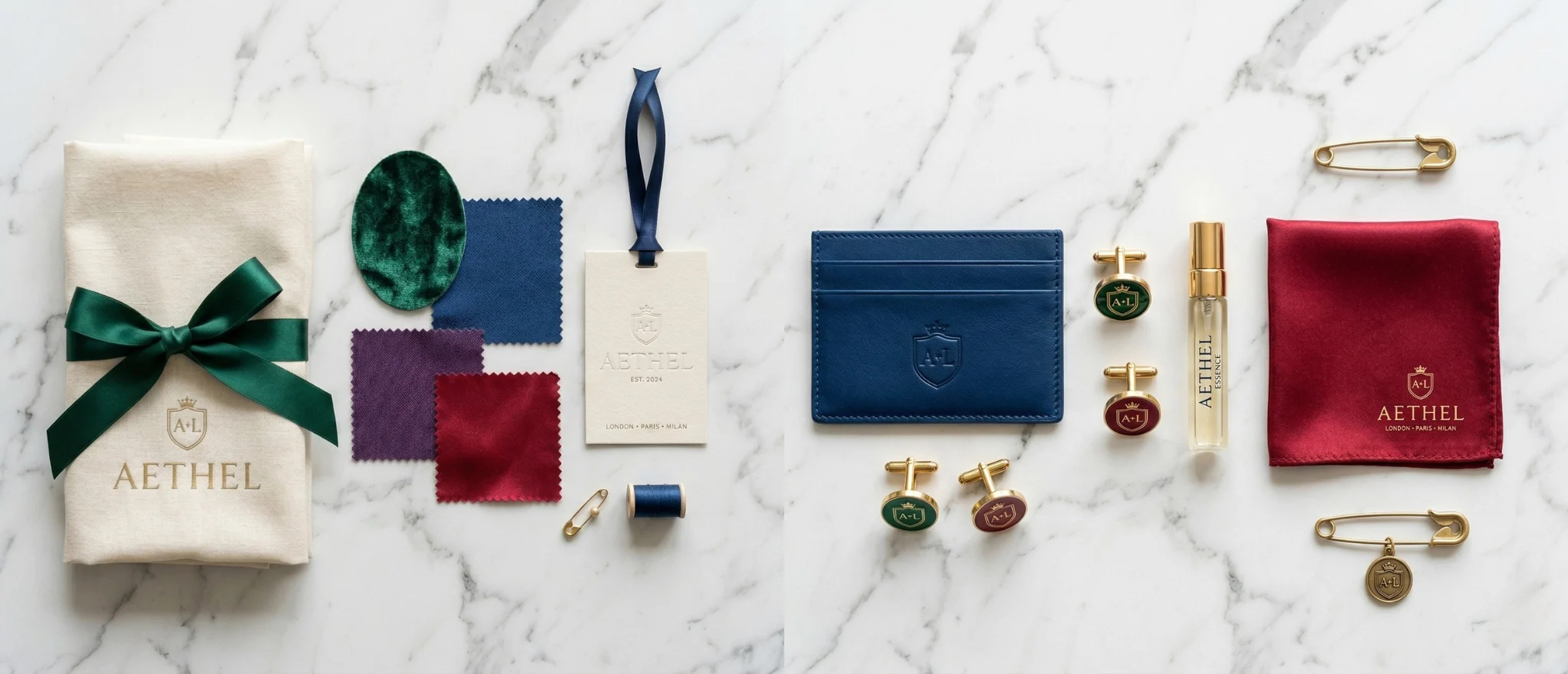
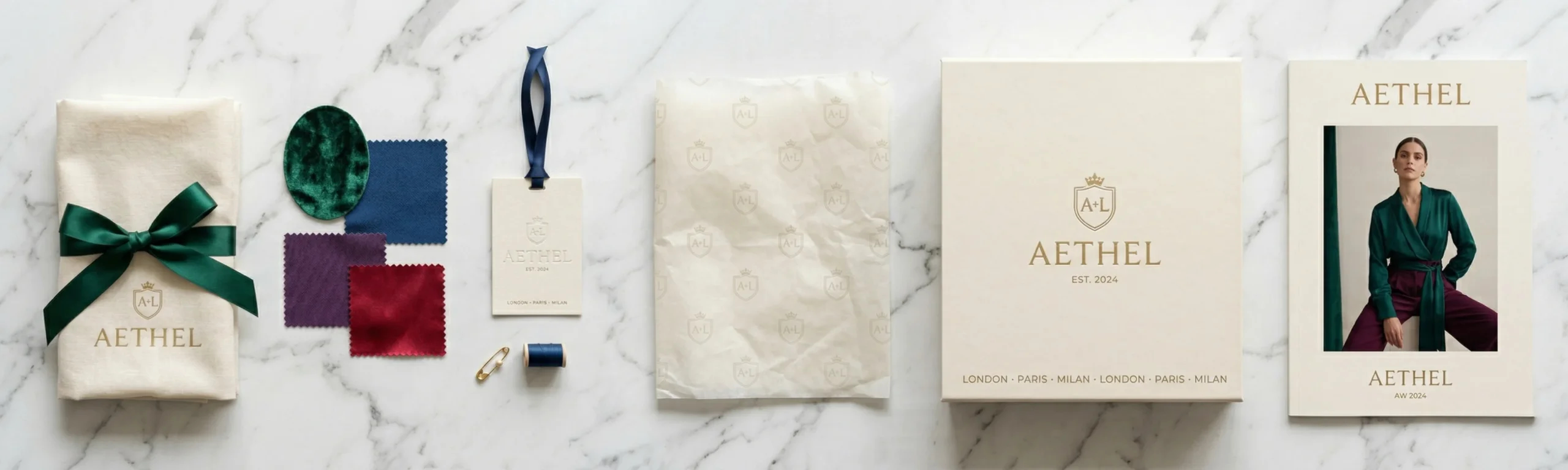
    In fashion, every physical touchpoint is a brand decision. The hangtag its weight, its design, its typography communicates price point before the price is read. The garment bag communicates care and intentionality. The tissue paper inside the packaging communicates premium before the product is revealed.

    Indian fashion brands entering premium retail in Dubai and Europe are often evaluated on these physical touchpoints before any garment is examined. The physical brand system must be built to the standard the market you are targeting expects.

    Stage Three: The Digital Brand Presence

    For fashion brands entering international markets, the digital presence is the showroom. Instagram is the primary discovery channel for premium fashion globally. A fashion brand’s Instagram feed is a curated visual essay on the aesthetic world it inhabits the styling, the photography, the models, the environments, the colour narrative.

    Indian textile brands entering the UAE, UK, or German market must invest in photography and content creation that sits comfortably in the visual context of the premium fashion brands they want to be discovered alongside.

    The Indian Textile Brand Story the World Is Ready For

    There is a specific moment happening in global fashion right now that Indian textile brands are uniquely positioned to capture. Post-pandemic, premium fashion consumers are actively seeking brands with genuine provenance, authentic craft heritage, and sustainable production stories.

    Bandhani from Kutch. Ikat from Pochampally. Block print from Bagru. Chanderi from Madhya Pradesh. Banarasi silk from Varanasi. These are not just fabric categories they are living craft traditions with centuries of refinement behind them. And the global premium fashion consumer is paying significant prices for exactly this kind of authenticated provenance.

    • Craft provenance stories the weaver’s name, the village, the technique’s history are priceable at premium in today’s global fashion market
    • Sustainability credentials built into the brand narrative natural dyes, traditional processes, artisan employment resonate powerfully with European buyers
    • Limited edition positioning around craft collections commands significantly higher margins than volume production
    • Direct-to-consumer digital channels reduce dependence on buyers and distributors who capture margin that should belong to the brand
    • Collaboration with Indian fashion designers gives textile brands credibility and editorial visibility they cannot build alone

    Surat and Ahmedabad’s textile sector has the production capability, the craft heritage, and the entrepreneurial energy to build Indian fashion brands that compete in the world’s most premium retail environments.

    The missing layer is brand strategy the structured, researched, and design-executed system that transforms a product into something a consumer chooses not because it is available, but because it represents something they want to be associated with.

      Ready to build a brand that commands your market? 

      Visit richestbranding.com  |  info@richestbranding.com

  • Honouring the Legacy, Building the Future: The Family Business Rebranding Guide

    Honouring the Legacy, Building the Future: The Family Business Rebranding Guide

    India’s family businesses are extraordinary. In Gujarat from Ahmedabad’s industrial families to Surat’s diamond and textile dynasties, from Baroda’s manufacturing businesses to the trading houses of Rajkot generations of commercial intelligence and entrepreneurial courage have built enterprises that have weathered partition, liberalisation, and globalisation. In Maharashtr from Mumbai’s legendary merchant families to Pune’s industrial dynasties the same story of generational resilience and relationship-built trust.

    These businesses deserve brand identities that honour what has been built and position them powerfully for what comes next. And yet, many of India’s finest family businesses are walking into their second or third generation with brand identities built in a different commercial era identities that served the founding generation beautifully but are now limiting what the business can achieve.

    1. Why Family Business Rebranding Is the Most Human Brand Project

    Rebranding a family business is unlike any other rebranding project. It is not just a commercial exercise it is a deeply personal one. The logo being replaced may be the mark that the founder applied to their first factory and their first truck. The colour being updated may be the one the founder chose with pride forty years ago. The name being refreshed may carry the family’s name literally.

    This is why family business rebranding requires a different kind of brand partnership one that balances commercial rigour with human sensitivity. At Richest Branding, when we work with family businesses on identity evolution, we begin not with design but with conversation. We listen to how the business was built, what values it has always stood for, and what the next generation wants to build upon that foundation.

    2. The Generational Transition Brand Challenge

    The most common catalyst for family business rebranding is generational transition the handover from founding generation to the next. This brings together two different but equally valid perspectives:

    The founding generation’s perspective:

    • The current brand is recognised and trusted why risk changing it?
    • The brand carries the family’s reputation changes feel deeply personal
    • What has worked for decades should not be discarded for trends

    The next generation’s perspective:

    • The current brand limits access to premium markets and premium customers
    • The brand does not reflect the company’s actual quality and ambition today
    • Competitors have modernised and are gaining ground because of it

    Both perspectives are right. The strategic resolution is brand evolution, not brand revolution a thoughtful modernisation that preserves the equity the founding generation built while giving the next generation a brand they can build their future with.

    3. Identifying What Must Be Preserved The Equity Audit

    The foundation of every successful family business rebrand is a rigorous equity audit a systematic assessment of which elements of the current brand carry genuine recognition that must be preserved. Not every element of an old brand has equity. Many have simply been there for a long time without accumulating meaningful value. But some elements a distinctive colour, a logo shape, the family name, a heritage tagline carry real recognition that, if changed, would confuse existing customers and erase years of investment.

    The equity audit identifies these protected elements precisely. Everything else becomes available for evolution. This is not a compromise between old and new it is the strategic discipline that makes brand evolution succeed where impulsive or total rebrand fails.

    4. The Language of Evolution Visual Signals That Say ‘We Have Grown’

    Visual evolution strategies for family business rebranding:

    • Refinement of the existing mark retaining the basic form but elevating the execution dramatically
    • Colour evolution maintaining general colour territory while moving to a more sophisticated palette
    • Typography modernisation replacing dated fonts with contemporary equivalents in the same register
    • Heritage integration founding year, city of origin, or founding story woven in as a pride mark
    • Quality materials elevation the same brand in premium print quality immediately reads as evolved

    5. Communication Strategy for the Rebrand Internal Before External

    One of the most neglected aspects of family business rebranding is internal communication how the rebrand is communicated to employees, long-standing suppliers, distributors, and trade partners. For family businesses where relationships are often decades-long and deeply personal, a rebrand that appears suddenly without context can create confusion and resistance.

    The solution is an internal communication programme that runs before the public launch sharing the story of why the brand is evolving, what has been preserved, and what the evolution means for the company’s future. When employees and trade partners understand and embrace the rebrand before public launch, they become its ambassadors.

    6. The Legacy Brands That Got Rebranding Right

    Some of India’s most beloved family businesses have successfully navigated brand evolution without losing their core identity or loyal customer base. The common thread in every successful case is not design quality alone it is strategic intent. A clear vision of what is being preserved, what is being evolved, and why.

    At Richest Branding, guiding family businesses through this journey is among the projects we approach with the greatest care and responsibility. Because when we work on a family business rebrand, we are not just working on a logo. We are working on a legacy and on the future the next generation will build upon it. That responsibility guides every decision we make.

    The families who built Gujarat and Maharashtra’s great businesses deserve brands that are as great as the businesses themselves. We build those brands. And we build them to last another generation.


    Ready to Build a Brand That Builds Empires?

    Strategy • Design • Impact

    richestbranding.com  |  info@richestbranding.com
    Richest Branding — Strategic Branding that Builds Empires

  • The Indian Beverage Brand Opportunity in Oman and Saudi Arabia Nobody Is Talking About

    The Indian Beverage Brand Opportunity in Oman and Saudi Arabia Nobody Is Talking About

    India Produces Some of the World’s Most Compelling Beverage Stories. The Gulf Is Waiting to Hear Them.

    Oman and Saudi Arabia are experiencing a beverage market transformation that is moving faster than most Indian brand owners realise. The non-alcoholic beverage sector in both countries is growing rapidly, driven by a young health conscious consumer population, significant urbanisation, premium retail expansion, and an influential Indian diaspora community with strong cultural connections to Indian beverage traditions.

    From traditional Indian sharbats and nimbu pani to modern functional health beverages built on Ayurvedic ingredients from premium packaged chaas and lassi to innovative botanical drink concepts the potential for Indian beverage brands to capture significant market share in Oman and Saudi Arabia is extraordinary. And the competition at the premium, authentic end of the market is, for now, minimal.

    The barrier to entry is not product India’s beverage formulation expertise is world class. The barrier is brand. International retail buyers in Muscat, Riyadh, and Jeddah evaluate beverage brands with sophisticated precision. And most Indian beverage brands, arriving with domestic-market packaging and undefined identities, are simply not passing that evaluation.

    1. Understanding the Gulf Beverage Consumer Three Distinct Audiences

    The three Gulf beverage consumer segments for Indian brands:

    • Indian and South Asian diaspora largest and most reliable initial market, seeking authentic flavours with premium presentation
    • Arab and local GCC consumers growing appetite for exotic, natural, and authentic beverages from premium provenance
    • Health-conscious urban professionals across nationalities, seeking functional and natural beverage alternatives

    The most successful Indian beverage brands in the Gulf target the first segment for volume and the second and third for premium margin and brand growth. This requires a brand identity that is authentically Indian but visually universal accessible and aspirational to consumers who have never visited India.

    2. What Oman’s Beverage Retail Requires

    Oman is a particularly promising market for Indian beverage brands. The country has a large Indian expatriate population, deeply established trade relationships with Indian suppliers, and a growing premium retail infrastructure in Muscat’s modern mall and supermarket network. The Omani consumer is particularly open to Indian cultural and food influences.

    Oman market packaging requirements for beverages:

    • Arabic language integration full bilingual label design, not just a translation panel
    • Nutritional information in the specific format required by Omani regulations
    • Halal certification from a recognised certifying body, prominently displayed
    • Best before and batch information clear, compliant, and consistently formatted
    • Distributor information Omani distributor details required on label for retail compliance

    3. Saudi Arabia’s Beverage Market The Premium Opportunity

    Saudi Arabia represents the largest and most commercially significant market in the Gulf for Indian beverage brands with genuine growth ambitions. With Vision 2030 modernising retail rapidly and consumer brand-consciousness growing, the scale of the Saudi beverage market opportunity is difficult to overstate. The growth of specialty beverage retail creates multiple channel entry points for well-branded Indian products.

    4. Botanical and Functional Beverages India’s Strongest Brand Proposition

    Of all Indian beverage categories with Gulf market potential, the botanical and functional segment offers the most compelling brand differentiation. Indian Ayurvedic tradition is extraordinarily rich in beverage applications cooling pitta-balancing drinks, immunity supporting botanical blends, ancient fruit and herb combinations with modern scientific validation.

    In the Gulf, where consumer interest in natural and plant-based beverages is growing rapidly, an Indian brand that combines ancient botanical wisdom with premium modern presentation has a uniquely powerful position. No European or American brand can authentically tell this story. This is exclusively India’s to own if Indian brands choose to build it properly.

    5. Packaging Design for Gulf Beverage Retail The Material Investment

    For Indian beverage brands targeting Oman and Saudi Arabia’s premium retail channels, the packaging material investment is non negotiable. Glass bottles despite higher logistic costs communicate premium positioning more powerfully than any other format in Gulf retail. The label design must be executed to international printing standards with colour consistency, material quality, and finishing that signals genuine brand investment to the retail buyer.

    6. The First Move Advantage Why Now Is the Time

    The premium authentic beverage space in Oman and Saudi Arabia is genuinely underdeveloped right now. The Indian brands that make the brand investment and market entry effort in the next two to three years are establishing positions that will be significantly harder to challenge once the market matures. This is a first-mover opportunity of the kind that rarely stays open for long.

    At Richest Branding, we build the brand identities and packaging systems that give Indian beverage brands the right to walk into Muscat’s premium supermarkets and Riyadh’s specialty stores and belong there. Because the opportunity is there. The question is only which Indian beverage brand will have the brand to take it.


    Ready to Build a Brand That Builds Empires?

    Strategy • Design • Impact

    richestbranding.com  |  info@richestbranding.com
    Richest Branding — Strategic Branding that Builds Empires

  • The Document That Protects Every Rupee You Have Ever Spent on Your Brand

    The Document That Protects Every Rupee You Have Ever Spent on Your Brand

    You Have Invested in Your Logo. Are You Protecting That Investment?

    Consider the journey of a typical Indian business’s brand identity. A logo is designed sometimes with care, sometimes quickly. It is applied to the website, business cards, and signage. Then, over months and years, it begins to drift. A social media post uses a slightly different colour. A brochure printed in a hurry uses a different font. The sales team creates a presentation in their own style. A vendor applies the logo without asking and uses the wrong version.

    Slowly, invisibly, the brand disintegrates into a collection of vaguely related visual assets that bear increasingly little resemblance to each other. The brand equity that should be accumulating recognition, trust, and recall built by consistent visual presentation is instead scattered across dozens of inconsistent brand expressions, none of them reinforcing the same message.

    This is the problem that brand guidelines solve. And it is a problem that costs Indian businesses across Ahmedabad, Mumbai, Bengaluru, and Pune enormous sums in lost brand value every year silently, gradually, without anyone noticing until the damage is substantial.

    1. What Brand Guidelines Are and What They Protect

    A brand guidelines document is the comprehensive rulebook that governs every visual expression of your brand. It defines precisely how your brand must look and feel across every application, leaving nothing to interpretation.

    A complete brand guidelines document covers:

    • Logo system primary logo, secondary versions, minimum sizes, clear space rules, and forbidden uses
    • Colour palette exact Pantone, CMYK, RGB, and HEX values for every brand colour
    • Typography system primary and secondary typefaces, hierarchy rules, and usage guidelines
    • Photography and illustration style the visual world the brand inhabits
    • Application examples the brand correctly applied across business cards, packaging, and digital
    • Brand voice guidelines tone of voice, language dos and don’ts, communication personality

    Without this document, every vendor, designer, and employee who touches your brand is working from their own interpretation. With it, every brand expression maintains the same standard regardless of who creates it, where, or when.

    2. The Consistency Compounding Effect

    The most powerful thing brand consistency does is compound. Every time a potential customer sees your brand on a delivery vehicle, a sponsored post, a brochure at a trade exhibition, or a storefront and sees the same visual language, the same colours, the same personality, that impression adds to an accumulating stack of brand recognition.

    After enough impressions, this becomes something extraordinarily valuable: instant recognition. The moment a consumer sees your brand in a new context, they already know who you are, what you stand for, and whether they trust you before a word is read. Amul. Asian Paints. Parle. They were not always large. They were always consistent. Consistency is available to every business. It requires the discipline of brand guidelines to maintain at scale.

    3. When Businesses Discover They Need Brand Guidelines

    Most businesses discover the need for brand guidelines at a moment of pain rather than planning. The most common triggers:

    • A new branch or franchise opens and looks completely different from the original
    • A senior leader reviews materials and notices significant visual inconsistency
    • A vendor produces something with the logo used incorrectly, damaging brand perception
    • An international partnership requires brand standards documentation
    • A funding round requires consistently professional presentation materials
    • Employee created social media posts look nothing like the official brand

    All of these painful moments are preventable with a single, well constructed brand guidelines document shared with every person who touches the brand.

    4. Brand Guidelines for Growing Businesses Scale Readiness

    For businesses in Ahmedabad, Mumbai, and Bengaluru that are actively growing adding team members, opening new locations, onboarding new vendors brand guidelines are not a luxury. They are operational infrastructure. Without them, brand quality degrades in direct proportion to the speed of growth.

    Every new employee who creates a presentation, every vendor who prints a banner, every agency running a campaign adds another potential point of brand inconsistency. Brand guidelines are the solution a shared standard that scales with the business.

    5. Digital Brand Guidelines The Modern Standard

    For growing businesses in 2026, the standard has evolved to digital first brand guidelines interactive documents or brand portals that make brand assets, guidelines, and templates immediately accessible to every team member and vendor. This accessibility dramatically increases compliance by removing the friction of finding and using the correct brand assets.

    6. Building Brand Guidelines That People Actually Use

    The most common failure mode of brand guidelines is that they are created, celebrated, filed, and never consulted again. At Richest Branding, we build brand guidelines with the end user in mind the marketing manager, the social media executive, the external printer, the agency. Clear, practical, and concise, with enough examples that application is intuitive rather than interpretive.

    Your logo cost time and money to create. Your brand guidelines are the document that makes sure that investment keeps paying off every time your brand appears in the world, in every format, forever.


    Ready to Build a Brand That Builds Empires?

    Strategy • Design • Impact

    richestbranding.com  |  info@richestbranding.com

    Richest Branding — Strategic Branding that Builds Empires

  • Shelf Trust: How Home and Personal Care Brands Win the Bathroom and the Kitchen Cabinet

    Shelf Trust: How Home and Personal Care Brands Win the Bathroom and the Kitchen Cabinet

    The Home Care Shelf Is the Most Overlooked Branding Opportunity in Indian FMCG

    Walk down the home care aisle of any modern trade supermarket in Mumbai or Ahmedabad. A cascade of nearly identical packaging similar shapes, similar colours, similar messaging. Blue bottles. White labels. Generic claims. Almost no brand that immediately and memorably says: this is different, this is better, this is ours.

    This visual sameness is both a symptom and an opportunity. A symptom of an industry that has historically competed on price and distribution rather than brand identity. And an enormous opportunity for any home or personal care brand willing to invest in genuinely strategic, differentiated packaging design because the bar for standing out is remarkably low.

    Post-pandemic hygiene consciousness has permanently elevated consumer engagement with this category. Consumers who once grabbed whatever was cheapest are now reading labels, comparing formulations, and making real brand decisions in categories that used to be pure commodity purchases. This is the moment for smart brands to build lasting equity.

    1. Building Brand Equity in a Category Defined by Habit

    Home and personal care products are among the most habit driven purchases in FMCG. Once a consumer integrates a product into their daily routine the floor cleaner under the sink, the hand wash by the basin they are extraordinarily loyal. Not because they consciously love the brand, but because switching requires a decision they have not thought about making.

    This is why packaging strategy for home care must be built with first trial as the primary objective. Every element colour, shape, messaging hierarchy, shelf presence must be optimised to win the moment of first consideration. Because the brand that wins that first purchase wins an extraordinarily long customer lifetime.

    2. The Trust Architecture of Home Care Packaging

    Trust is the foundational purchase criterion. Consumers are choosing products that will clean their homes, touch their skin, and be used around their children. The packaging must communicate safety, efficacy, and reliability before any other message.

    The five trust signals home care packaging must deliver:

    • Ingredient transparency clear, clean communication of what is in the product and why it works
    • Certification visibility ISI, organic, dermatologically tested marks prominently placed
    • Brand permanence signals quality materials, professional printing, consistent design language
    • Safety communication child-safety features, usage instructions, cautionary information
    • Heritage or provenance where the product comes from and the quality standards behind it

    3. Packaging Architecture for Home Care Range Coherence

    One of the most critical and most neglected aspects of home care brand design is range architecture the system that makes a multi SKU product line look and feel like a coherent brand family rather than a collection of unrelated products.

    Gujarat based home care manufacturers supplying across multiple product categories dishwash, floor cleaner, toilet cleaner, hand wash, surface spray face a particular challenge. Each category has different visual conventions and consumer expectations. But they all carry the same brand name and must collectively build the same brand equity.

    The solution is a robust design system a master brand architecture that establishes the visual constants across the range while allowing each product category the flexibility to speak its own language within those constants.

    4. The Premium Positioning Opportunity in Home Care

    India’s home care market has historically been dominated by mass market, value driven positioning. The opportunity opening right now and that forward thinking Mumbai and Gujarat brands are beginning to exploit is the premium tier. A growing consumer segment is actively seeking home care products that feel premium, use better ingredients, are environmentally responsible, and come in packaging they are not embarrassed to leave on the bathroom counter.

    Premium home care packaging signals:

    • Minimal design  generous white space communicates confidence and premium positioning
    • Considered colour palette muted naturals and sophisticated blacks over bright mass-market tones
    • Quality materials frosted bottles, textured labels, weighted closures, soft-touch finishes
    • Ingredient-forward communication leading with what is special about the formulation

    5. Sustainable Packaging From Trend to Brand Value

    Sustainability has moved from a marketing trend to a genuine consumer expectation in home and personal care, particularly among urban consumers in Mumbai, Bengaluru, and Pune. Refillable formats, recycled materials, and biodegradable labels are increasingly affecting purchase decisions in modern trade and D2C channels.

    For Gujarat based home care manufacturers with the capability to implement more sustainable packaging formats, communicating sustainability as a brand value not just a product feature is a significant differentiation opportunity. A brand genuinely committed to environmental responsibility occupies an increasingly valuable market position.

    6. From Private Label to Owned Brand The Home Care Manufacturer’s Brand Moment

    Many of Gujarat’s most capable home care manufacturers are currently supplying private label product to national retailers and larger FMCG companies. The margin and the loyalty always accrue to the brand owner. The manufacturers who transition to building their own branded home care range with strategic packaging design and brand identity investment are the ones who capture the full value of their formulation capabilities.

    The Gujarat home care market is ready for brands that combine manufacturing excellence with brand sophistication. At Richest Branding, we build exactly those brands.


    Ready to Build a Brand That Builds Empires?

    Strategy • Design • Impact

    richestbranding.com  |  info@richestbranding.com

    Richest Branding — Strategic Branding that Builds Empires

  • Why Your Restaurant Brand Is Either Filling Tables or Emptying Them

    Why Your Restaurant Brand Is Either Filling Tables or Emptying Them

    Food is Abundant in Bengaluru and Pune. Great Restaurant Brands Are Still Rare.

    Bengaluru’s Indiranagar and Koramangala have more restaurants per square kilometre than almost anywhere in India. Pune’s Koregaon Park and Baner corridors are no different. Both cities have seen an extraordinary explosion of food and beverage establishments from cloud kitchens to fine dining, from artisanal cafes to QSR chains.

    And yet, walk through either neighbourhood and ask yourself: which of these restaurants has a brand? Not just a name. Not just a logo. A brand a clear identity, a consistent experience, a reason to choose and return that goes beyond the food itself. The honest answer is: very few. Most restaurants in India’s fastest growing food cities compete on food quality alone, without the brand scaffolding that turns great food businesses into great food brands.

    At Richest Branding, the pattern is always the same: the businesses that invest in brand identity early grow faster, fill tables more consistently, and build the customer loyalty that word of mouth amplifies. The ones that treat branding as an afterthought compete on price, struggle for differentiation, and churn customers in the most crowded dining market in the world.

    1. What Restaurant Branding Actually Means Beyond the Logo on the Menu

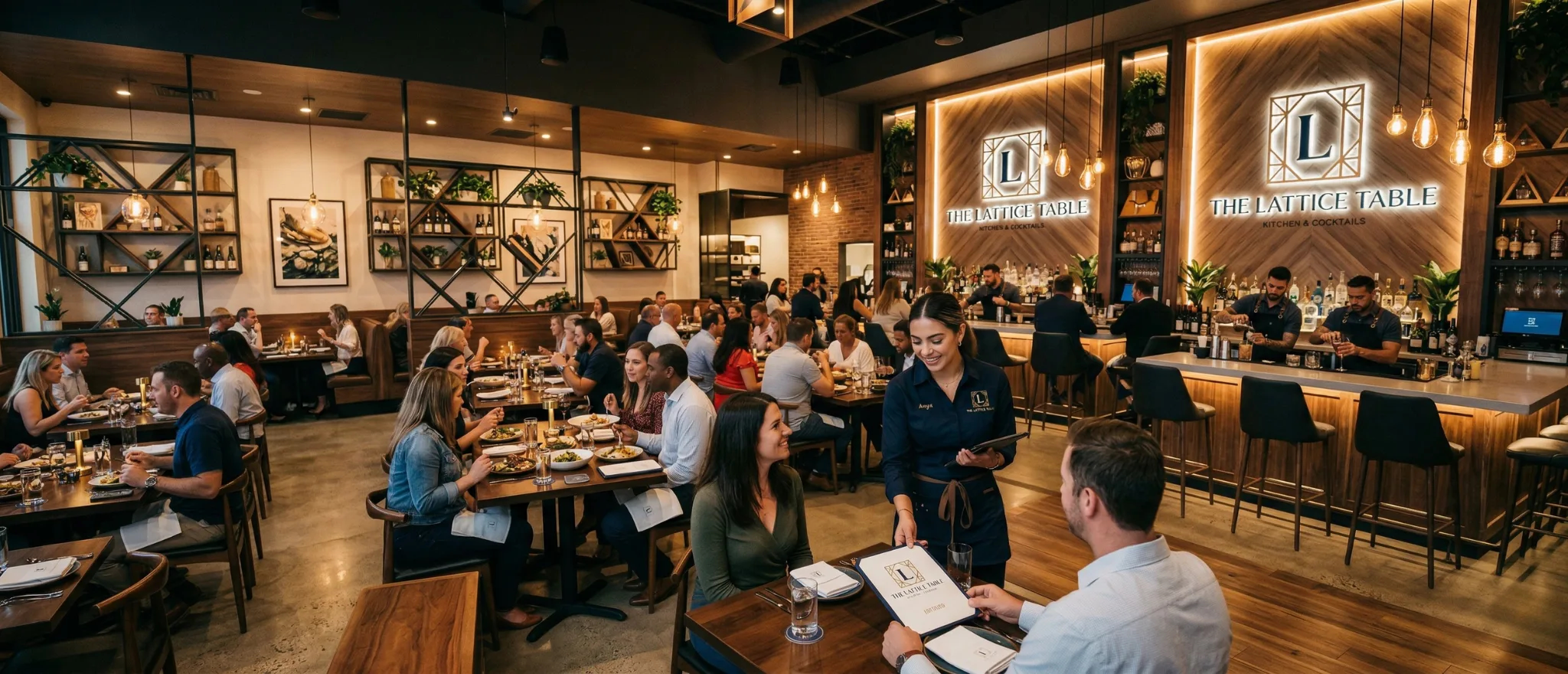
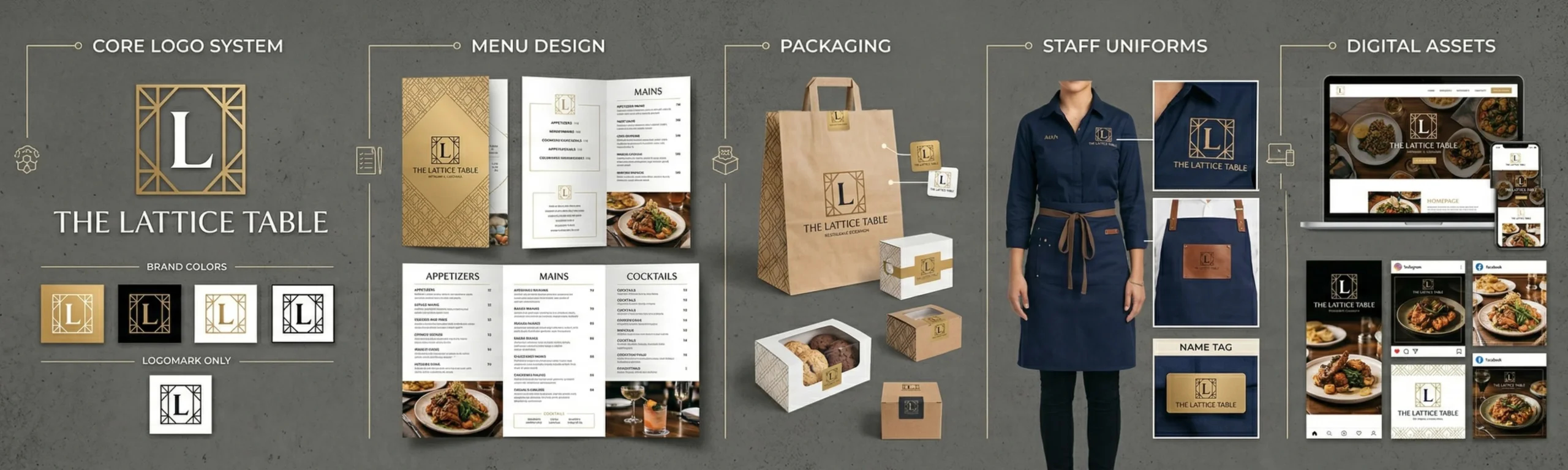
    Restaurant branding is the complete sensory and emotional experience of your establishment everything a guest encounters from the moment they discover you online to the moment they step back onto the street after their meal. The logo is one small element. The brand is everything.

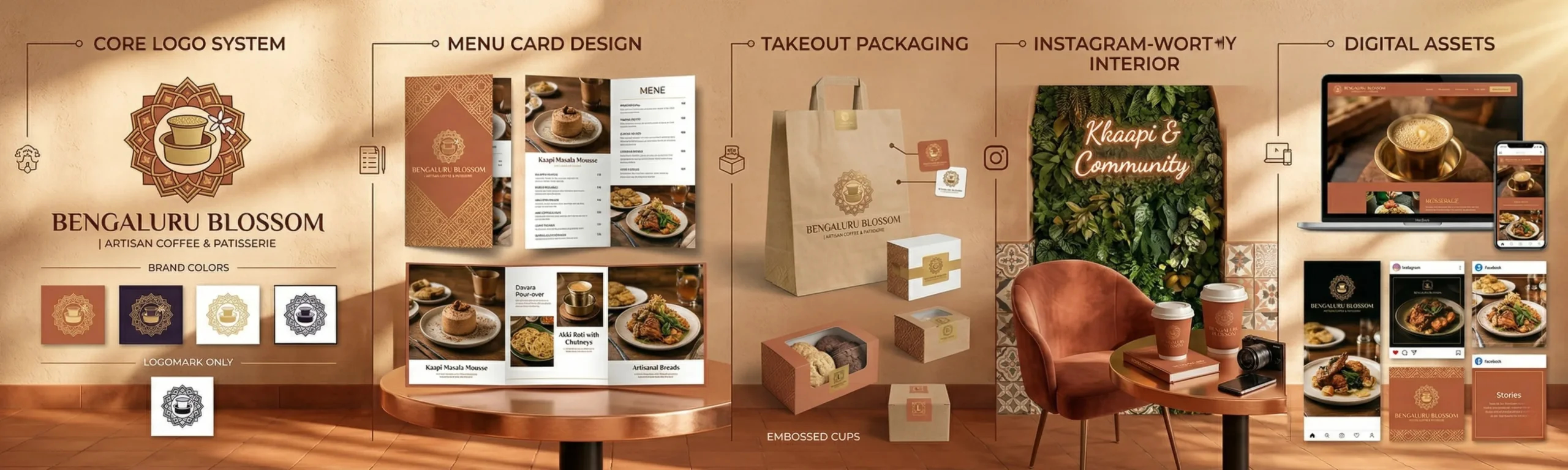
    The complete restaurant brand experience:

    • Name and logo the first point of recognition and recall
    • Interior design the physical world the brand lives in
    • Menu design a brand touchpoint guests hold in their hands for ten minutes
    • Staff presentation uniform design, language, and service style as brand expression
    • Packaging takeaway bags, boxes, and cups that carry the brand into the world
    • Digital presence website, Instagram, Zomato, Swiggy profiles, and Google listing
    • Brand voice personality expressed through copy, captions, and guest communication

    2. The 60-Second Judgement How Guests Decide Before They Sit Down

    Research into dining behaviour consistently shows that a guest’s perception of a restaurant’s quality is largely formed within sixty seconds of arrival. The visual impression of the exterior, the greeting, the interior design, and the menu design together create an immediate perception that the food then either confirms or fails to live up to.

    A restaurant with exceptional food but weak brand design systematically undervalues its own offering. Guests arrive with calibrated-down expectations and, even when the food exceeds them, the experience feels like a pleasant surprise rather than a premium one. Premium experiences command premium prices, repeat visits, and five-star reviews.

    3. The Bengaluru Food Brand Opportunity Premium Positioning in a Sophisticated Market

    Bengaluru’s dining consumer is arguably the most brand-literate in India outside Mumbai. The city’s tech workforce consumer base internationally travelled, globally culturally aware, accustomed to paying for quality experiences is deeply attuned to brand signals. They know what a well branded restaurant feels like, and they actively seek it out.

    A Bengaluru cafe or restaurant that positions itself with the same visual rigour as the city’s best international food brands does not just attract more customers it attracts better customers, who pay more, return more often, and bring more people with them.

    4. Social Media Branding for Restaurants Designing for the Feed and the Table

    In 2026, a restaurant’s Instagram presence is as important as its physical presence. For food businesses in Bengaluru and Pune, the discovery journey almost always begins with a scroll a friend’s tagged post, a food blogger’s reel, or a sponsored discovery. The visual identity must perform in the digital environment with the same power it performs physically.

    Designing a restaurant brand for social media impact:

    • A signature visual element colour, pattern, or motif that appears in every photo
    • Instagrammable interior moments a wall, light installation, or view that guests seek out
    • Branded packaging that photographs beautifully and tags the restaurant when shared
    • A consistent visual grid strategy for the restaurant’s own Instagram presence

    5. Franchise Ready Branding Building for the First Location with the Tenth in Mind

    One of the most valuable things a restaurant brand investment does is franchise readiness. A brand with strong guidelines, a clear visual system, and documented brand standards is infinitely easier to franchise than one that relies on the founder’s intuition. For ambitious food entrepreneurs in Bengaluru and Pune, building the brand right the first time is the most important decision they make.

    6. The Richest Branding Approach to Food Service Identity

    When we build restaurant and food service brands, we begin with the experience not the visual. We map every touchpoint a guest encounters and design the brand system to perform at each one. The logo, colours, typography, interior direction, packaging architecture, and digital identity are designed as a single cohesive system.

    The result is not just a restaurant that looks good. It is a restaurant that feels like a brand one that guests return to, recommend enthusiastically, photograph and share instinctively, and remember long after the meal. Because the best food businesses are not remembered for what they served. They are remembered for how they made guests feel. That feeling is brand.


    Ready to Build a Brand That Builds Empires?

    Strategy • Design • Impact

    richestbranding.com  |  info@richestbranding.com

    Richest Branding — Strategic Branding that Builds Empires


  • Building FMCG Brand Identity from Baroda: Why Gujarat’s Manufacturers Are India’s Next Big Brand Story

    Building FMCG Brand Identity from Baroda: Why Gujarat’s Manufacturers Are India’s Next Big Brand Story

    Gujarat Makes the Products. But Gujarat Is Not Yet Making the Brands.

    This is a statement that will challenge and perhaps provoke some readers from the FMCG business community in Baroda, Ahmedabad, and Surat. But it is said with deep respect and with the conviction that the gap it identifies represents the single biggest business opportunity available to Gujarat’s FMCG manufacturers right now.

    Gujarat’s manufacturing infrastructure is extraordinary. The state produces a significant share of India’s FMCG products from food and beverage to personal care, from cleaning products to packaged goods. The production quality, the supply chain sophistication, and the entrepreneurial drive of Gujarat’s FMCG sector are world-class.

    And yet, when we look at the brands that capture the premium value in these categories nationally the brands that command the highest prices, the best shelf placement, the strongest consumer loyalty a disproportionate share of the brand value is captured elsewhere. Gujarat manufactures but does not always brand. And brand is where the margin lives.

    1. The Manufacturer to Brand Transition: What Changes and What Does Not

    For Gujarat FMCG manufacturers considering the transition from B2B supply or private label production to building their own brand, the journey is significant but absolutely achievable. What must change is the investment mindset from optimising for production cost to investing in brand value creation. What does not change is the product quality advantage that Gujarat manufacturing already delivers.

    The manufacturer-to-brand transition requires investment in:

    • Brand strategy defining positioning, target audience, and market differentiation clearly
    • Brand identity logo, visual system, packaging design built for brand, not just function
    • Channel strategy understanding which retail and distribution channels match the brand positioning
    • Marketing investment building brand awareness and trial with the right consumer segments
    • Brand team capacity internal ownership of brand decisions rather than outsourcing everything

    2. The Private Label Trap and How to Escape It

    Many Baroda and Surat FMCG manufacturers have built substantial businesses through private label production making products for larger national brands who put their own packaging and branding on Gujarat made goods. This is a legitimate and often profitable business model, but it has a structural ceiling.

    In private label production, the manufacturer captures production margin but surrenders brand margin and brand margin, over time, is where the most significant value accumulates. The brand owner who uses your production facility to supply their nationally known product is capturing margins that are multiples of yours, built on your manufacturing capability.

    The manufacturers who break out of this ceiling are the ones who make the strategic decision to build their own brand often using the same formulations, the same production capability, but now investing in the brand asset that allows them to capture the full value chain.

    3. FMCG Brand Architecture: Building a Portfolio That Scales

    One of the most important strategic decisions a Gujarat FMCG manufacturer makes when building their brand is whether to build a mono-brand all products under one master brand or a house of brands separate brand identities for different product categories or consumer segments.

    For most Gujarat FMCG manufacturers at the brand building stage, a mono brand strategy with strong sub brand architecture is the most capital efficient approach. One master brand, built with enough equity and meaning to stretch across multiple product lines, with clear variant and range architecture below it.

    This requires getting the master brand strategy and identity right from the beginning because everything that comes later builds on that foundation. A weak or generic master brand identity limits how far the portfolio can stretch without the sub brands feeling disconnected and incoherent.

    4. Distribution Channel and Brand Design Alignment

    For Baroda-based FMCG brands targeting national distribution, the packaging design must work across dramatically different retail environments simultaneously from modern trade supermarkets in Mumbai and Bengaluru to general trade kirana stores in tier-2 cities to online marketplaces across India.

    This multi channel requirement is one of the most technically challenging aspects of FMCG packaging design. What works at eye level in a Reliance Smart must also work on a kirana shelf where the shopkeeper stacks products without regard for brand hierarchy. What photographs beautifully for an Amazon listing must also be scannable in a distribution centre.

    Multi-channel FMCG packaging design principles:

    • Brand mark must be legible at every scale from shelf label to truck livery
    • Colour blocking must differentiate the brand from channel-specific competitors
    • Pack architecture must accommodate retailer-specific SKU requirements without losing brand coherence
    • E-commerce packaging must be designed for the white background thumbnail test

    5. The Gujarat Brand Advantage: Authenticity as a Brand Asset

    For Gujarat made FMCG products in categories like food, spices, namkeen, traditional snacks, and Ayurvedic personal care, the Gujarat origin is a genuine brand asset if the brand identity is built to leverage it.

    Consumers across India and internationally associate Gujarat with quality food production, business integrity, and authentic traditional recipes. A Gujarat origin FMCG brand that leads with this provenance authentically, not as a cliche is tapping into a reservoir of positive consumer association that competitors from other regions cannot replicate.

    At Richest Branding, we have helped multiple Gujarat FMCG brands build this provenance narrative into their brand identity creating a visual and verbal brand language that is simultaneously premium and rooted, modern and authentic. The result is brands that do not just sell products they sell a story that belongs only to Gujarat.

    6. The Investment Calculus: What FMCG Brand Building Costs and What It Returns

    The most common question we receive from Gujarat FMCG manufacturers considering brand investment is a version of: how much does it cost, and what will I get back? It is a fair question, and one that deserves a direct answer.

    The cost of building a complete FMCG brand identity strategy, logo, packaging system, brand guidelines, and launch collateral is an investment that begins delivering returns from day one of launch. Better retail placement, higher initial price point achievement, faster trial and repeat rates, and stronger distributor confidence are all measurable outcomes that typically deliver return multiples on brand investment within the first year of operation.

    The most important thing to understand is this: the cost of not investing in brand is higher than the cost of investing in it. Every year that a Gujarat FMCG manufacturer operates without a premium brand identity is a year of capturing production margin while surrendering brand margin to competitors. That accumulated foregone value is the real cost of delay.

    At Richest Branding, we build FMCG brands for manufacturers who are ready to stop just making great products and start owning great brands. Because the most powerful businesses in the world are not the ones that manufacture the best. They are the ones that brand the best. And Gujarat has every ingredient it needs to brand the best in the world.


    Ready to Build a Brand That Builds Empires?

    Strategy • Design • Impact

    richestbranding.com  |  info@richestbranding.com

    Richest Branding — Strategic Branding that Builds Empires